

The Long Way to Looking
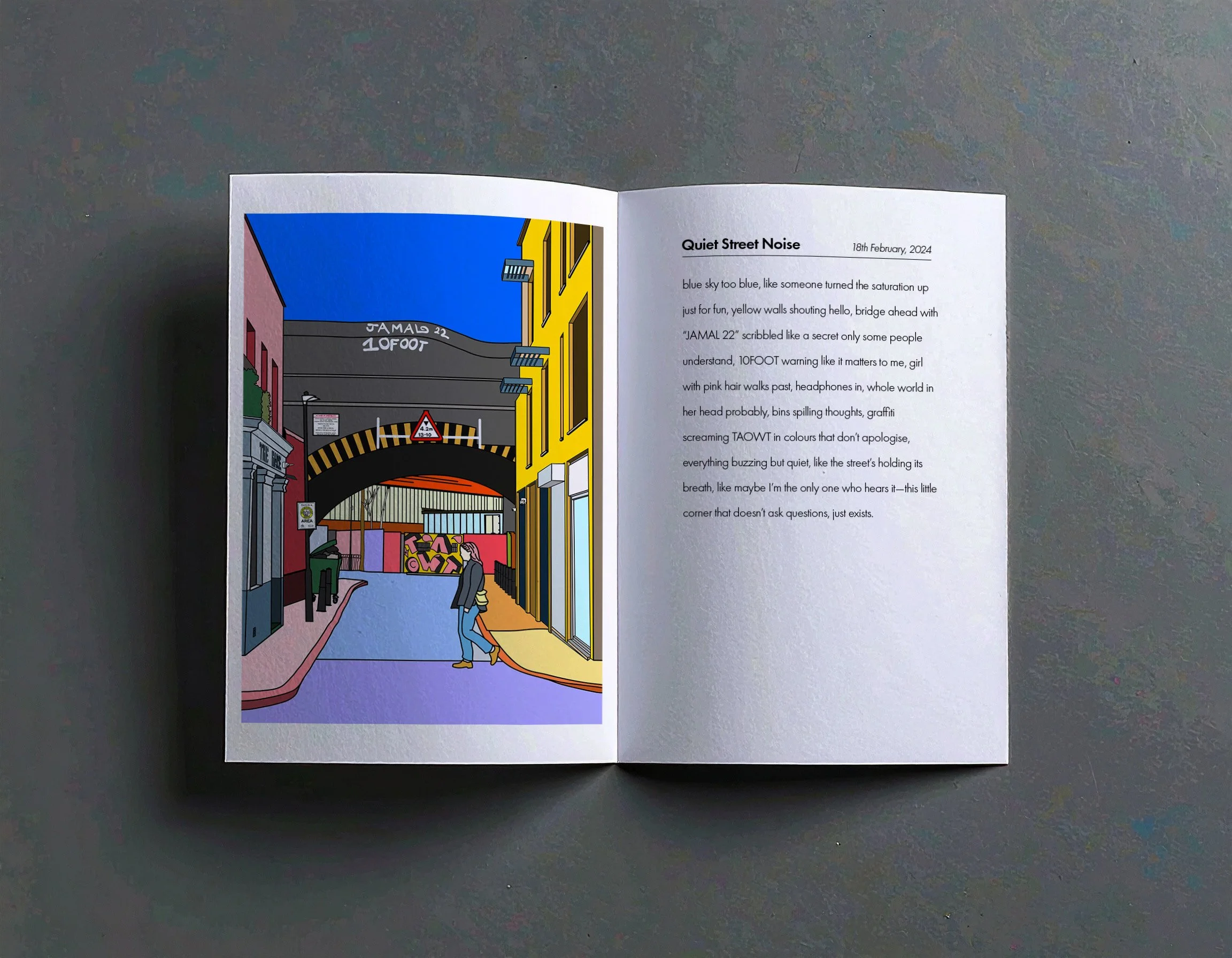
When I first moved to London, there was a period when I kept collecting ordinary moments.
A coffee shop in Broadway Market.
A train carriage on the way home.
A rainy afternoon.
Nothing remarkable happened. They were simply moments that caught my attention for reasons I couldn’t explain.
I would photograph them before they disappeared into another day.
Around the same time, I was experimenting with generative AI. What interested me wasn’t how accurately it could generate an image, but how it filled the gaps when it didn’t know enough. I wanted to see what would happen if those uncertainties became part of the work.
At the time, I called the project Virtual Diary.
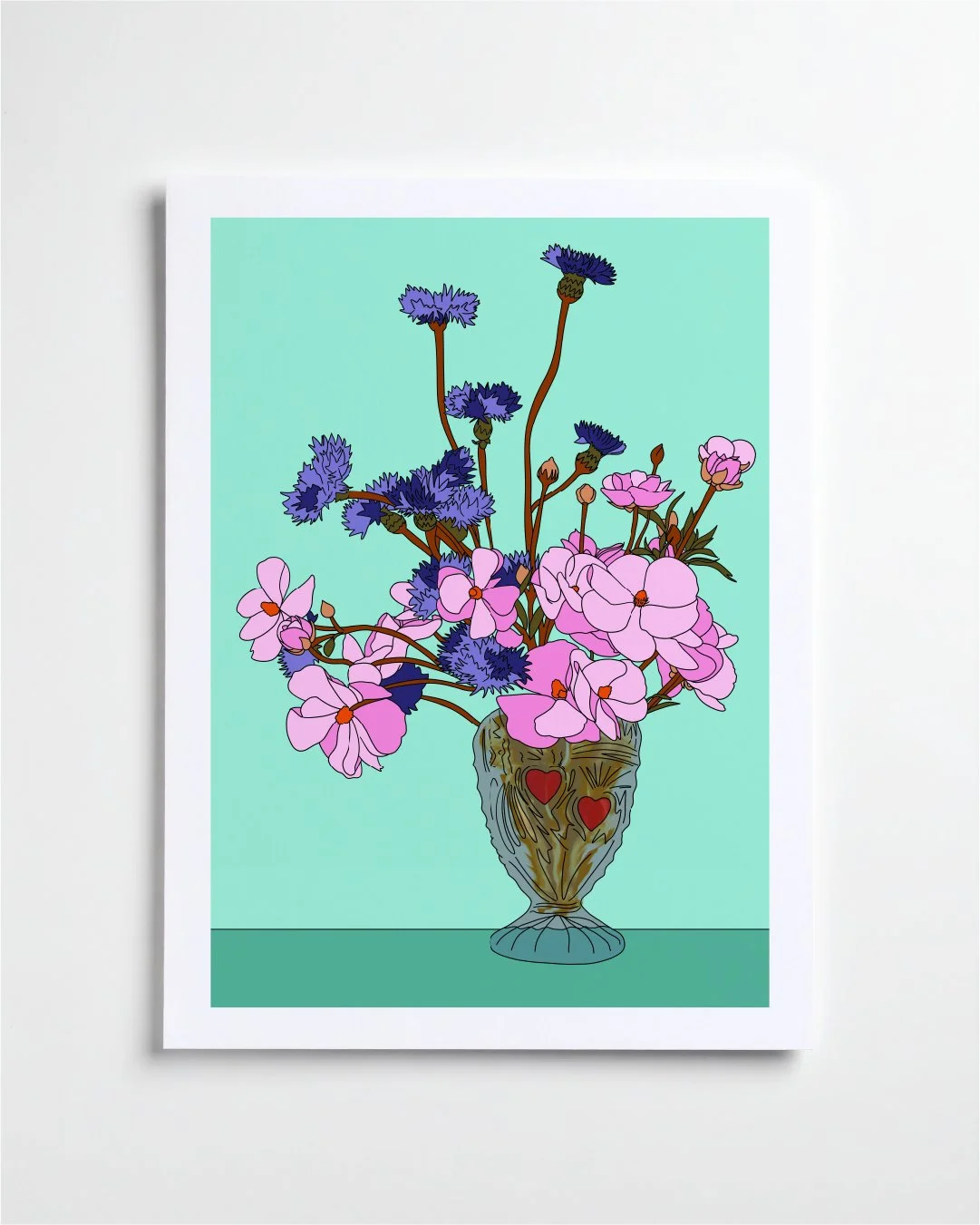
The idea began with a question.
What would happen if, instead of using AI as a tool to make images, I invited it into the creative process itself?
Not to replace my drawing.
Not to generate the final work.
But to become another voice between the moment I experienced and the illustration I eventually made.
The photographs were only the starting point.
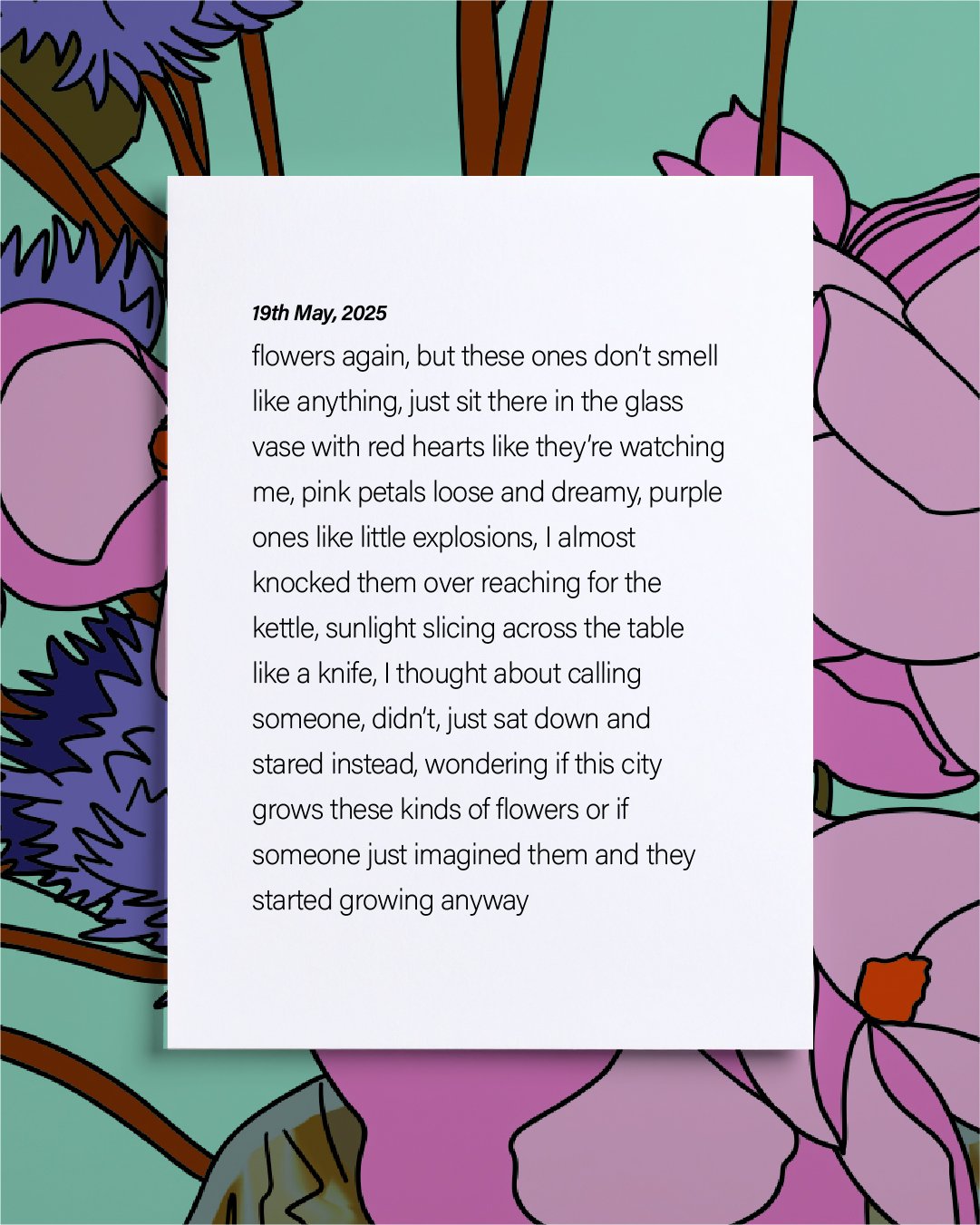
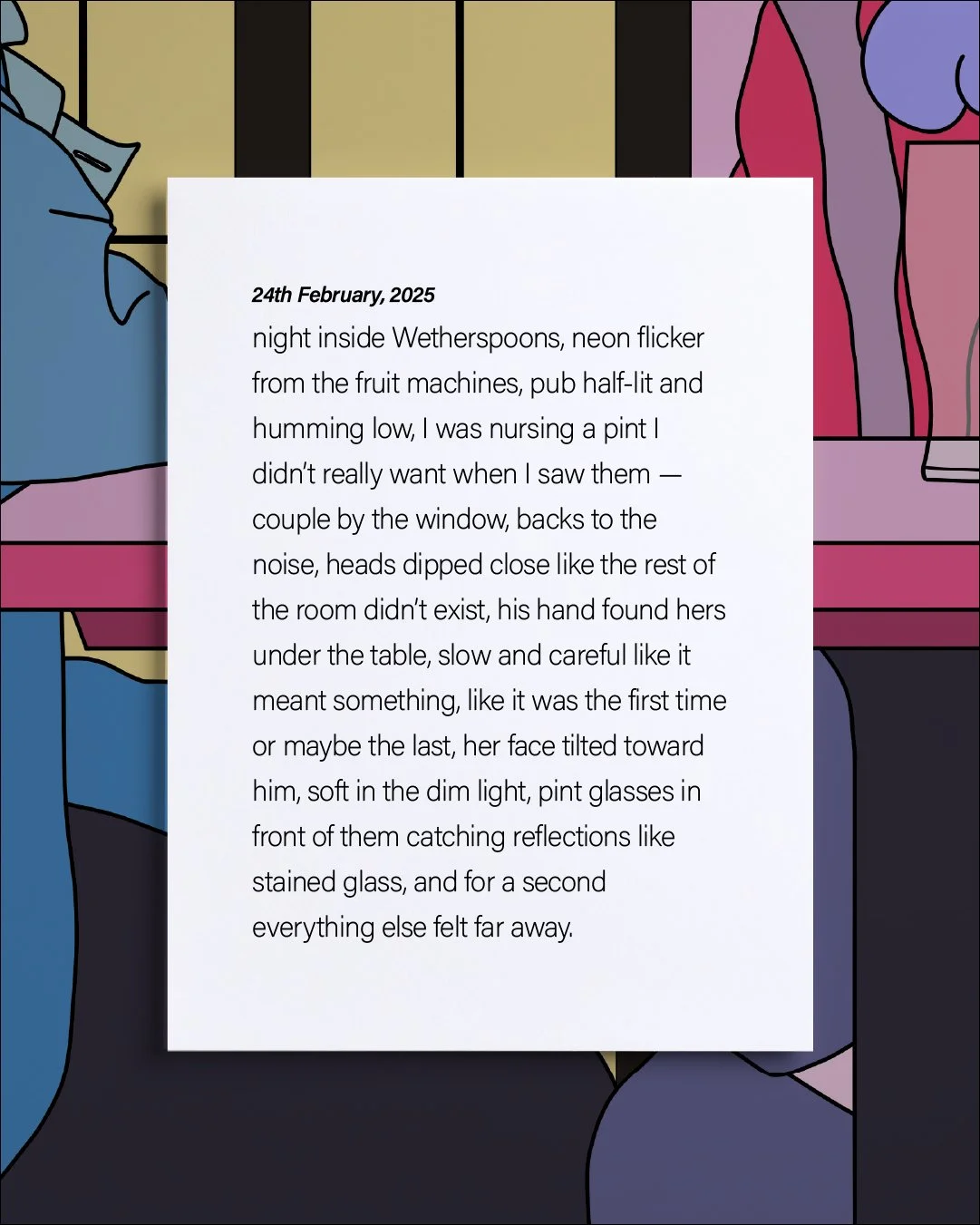
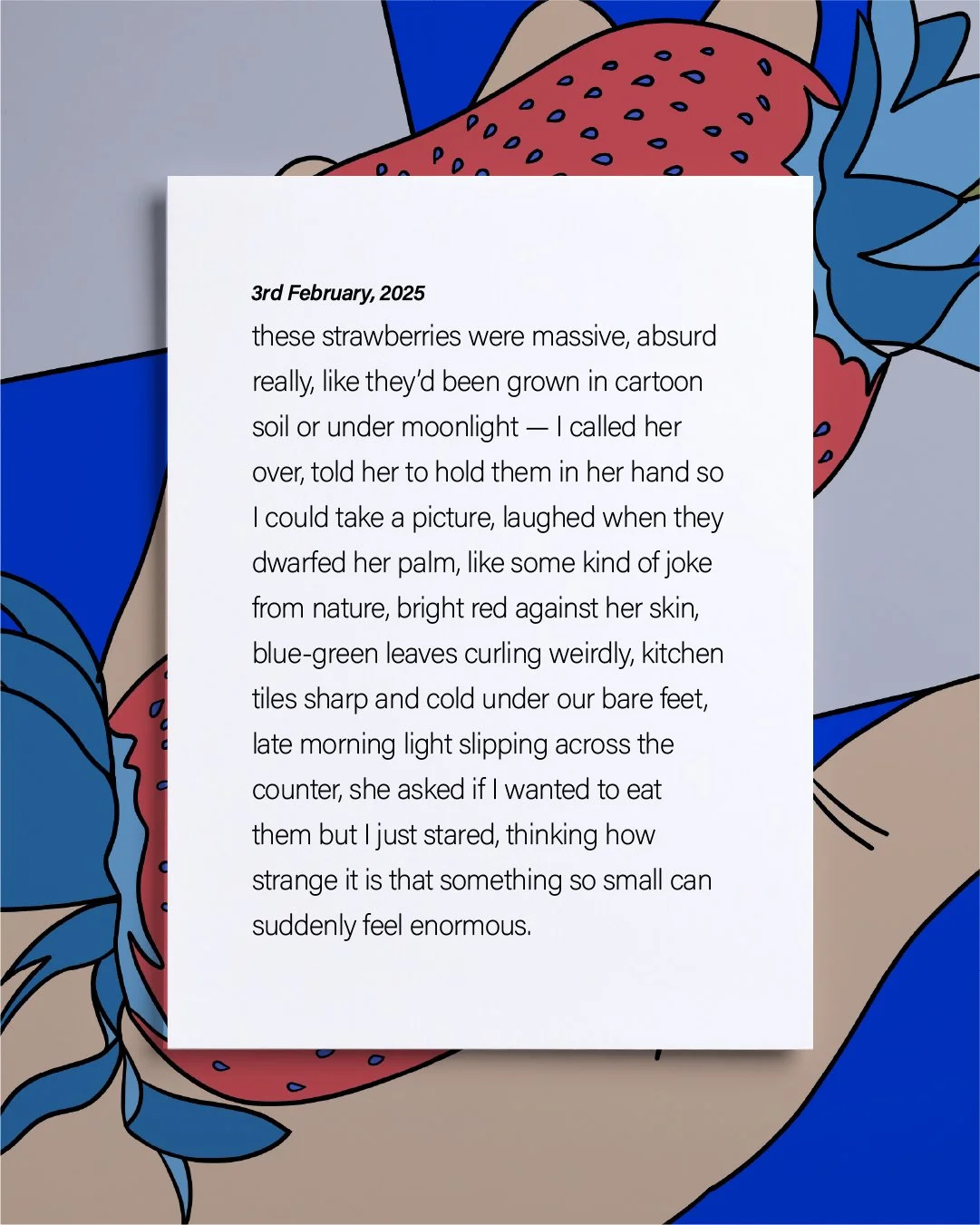
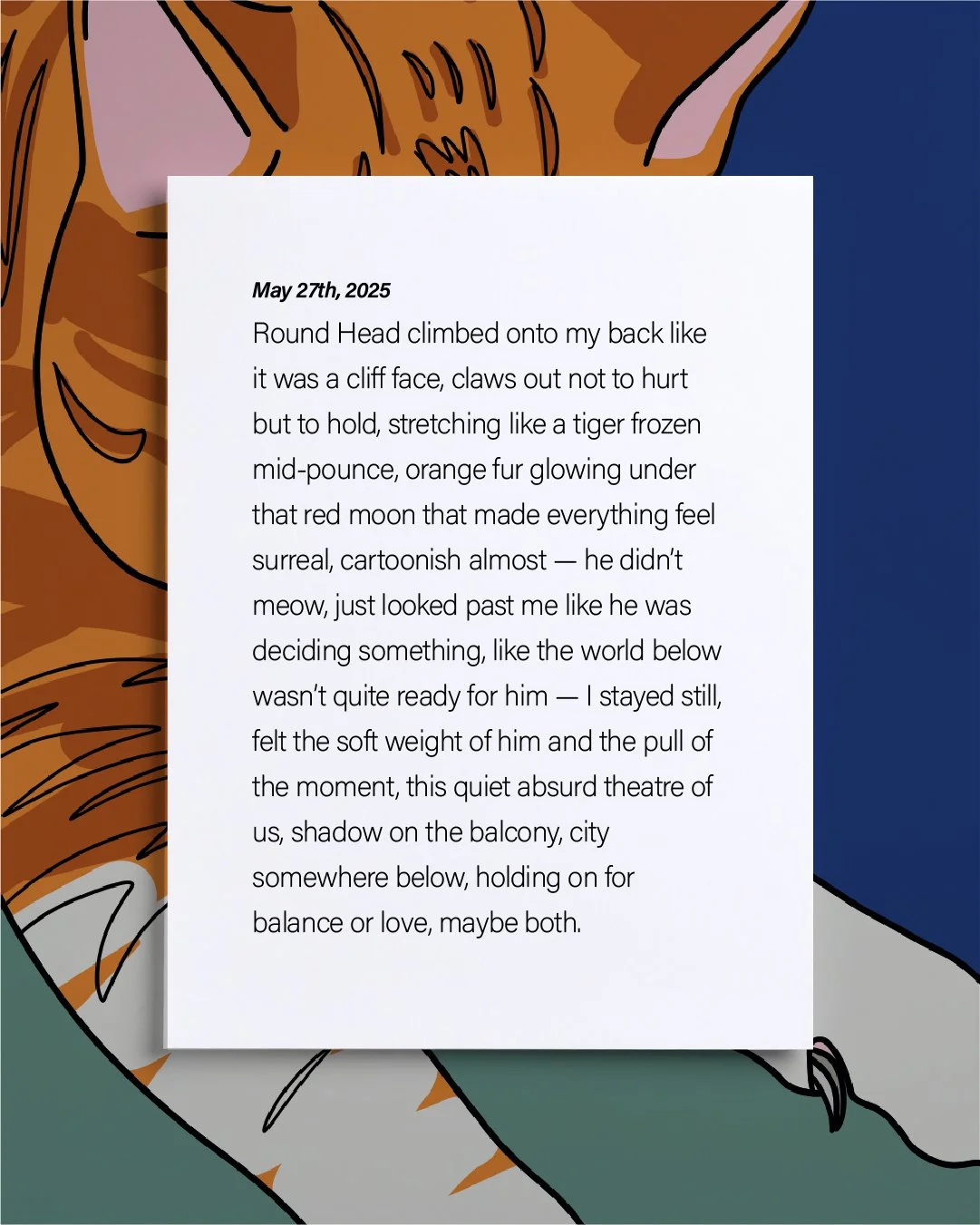
I would return to them later and describe the scene to AI - not as an objective record, but through the things I remembered noticing. A colour. A gesture. The mood of the room. The feeling that stayed after everything else had faded.
Then I would ask AI to write a diary entry.
Not a factual diary.
Something closer to a dream.
A stream of consciousness that drifted between reality and fiction, where some details came from the real world while others existed only in imagination.
The facts didn’t matter very much.
The atmosphere did.
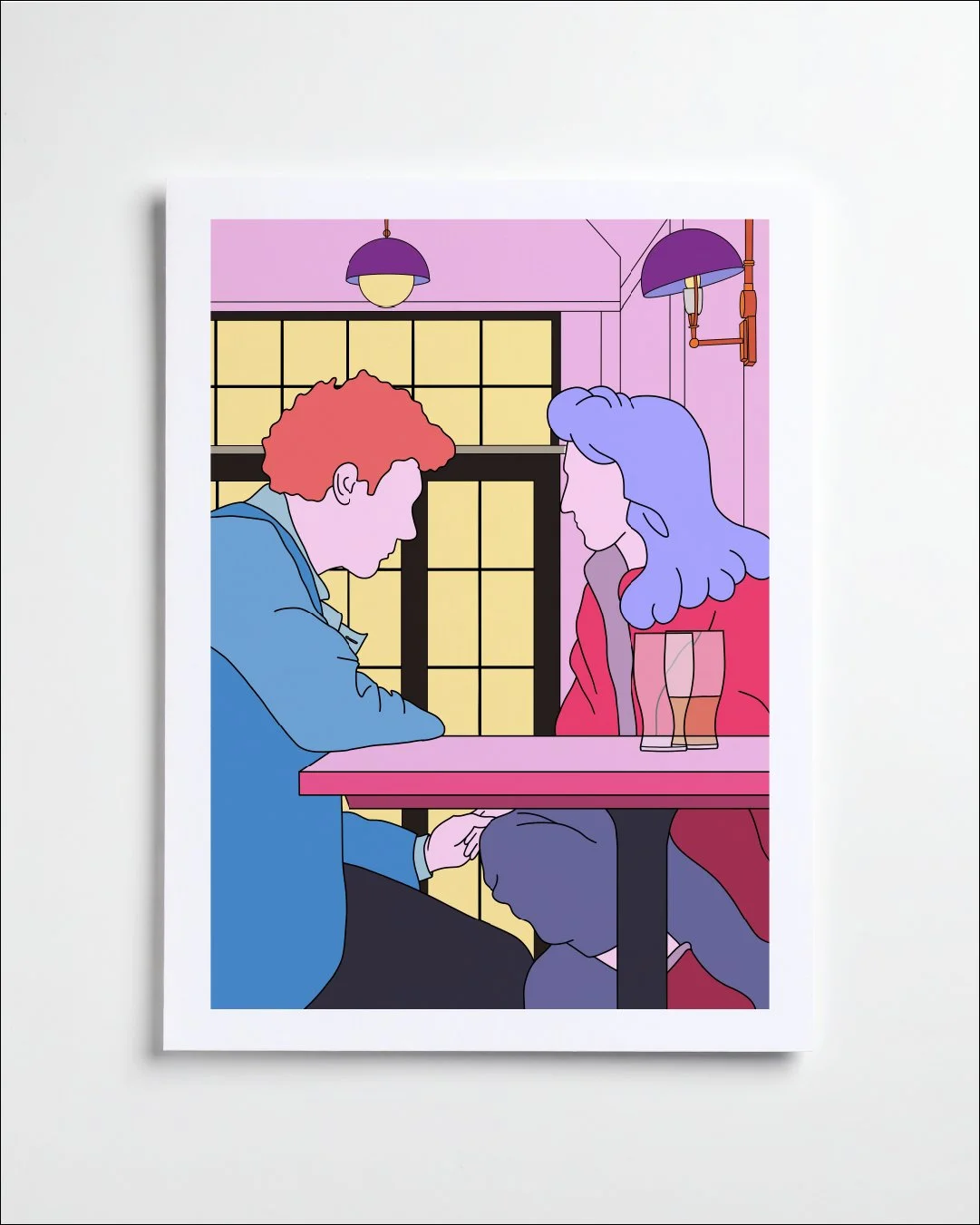
Reading those entries always felt unfamiliar.
They weren’t describing what had happened.
They were describing what the moment could have become.
Sometimes they wandered somewhere I hadn’t expected.
Sometimes they misunderstood what I meant.
Sometimes they found an emotion I hadn’t been able to put into words myself.
I never tried to steer them back.
Those unexpected turns were the collaboration.
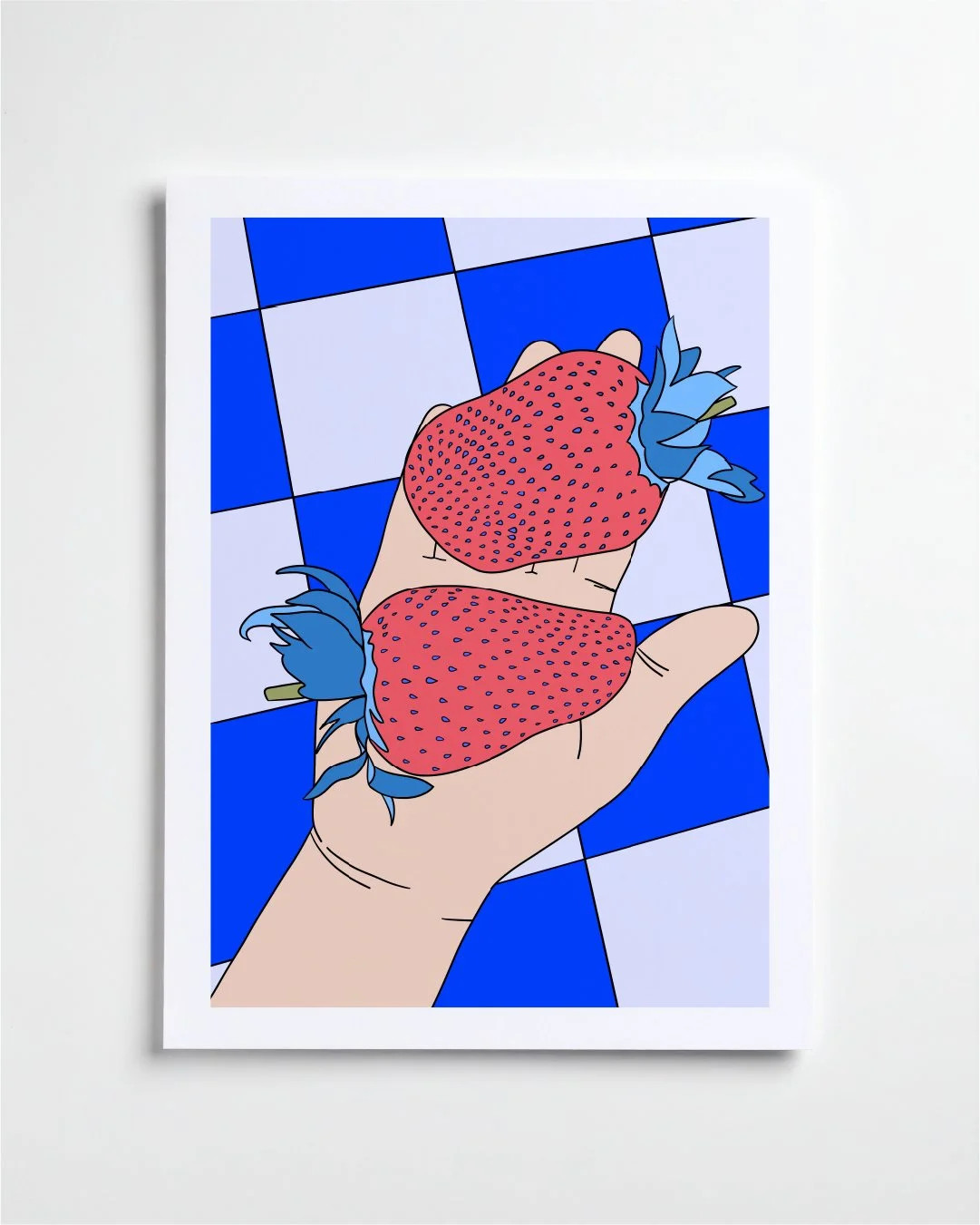
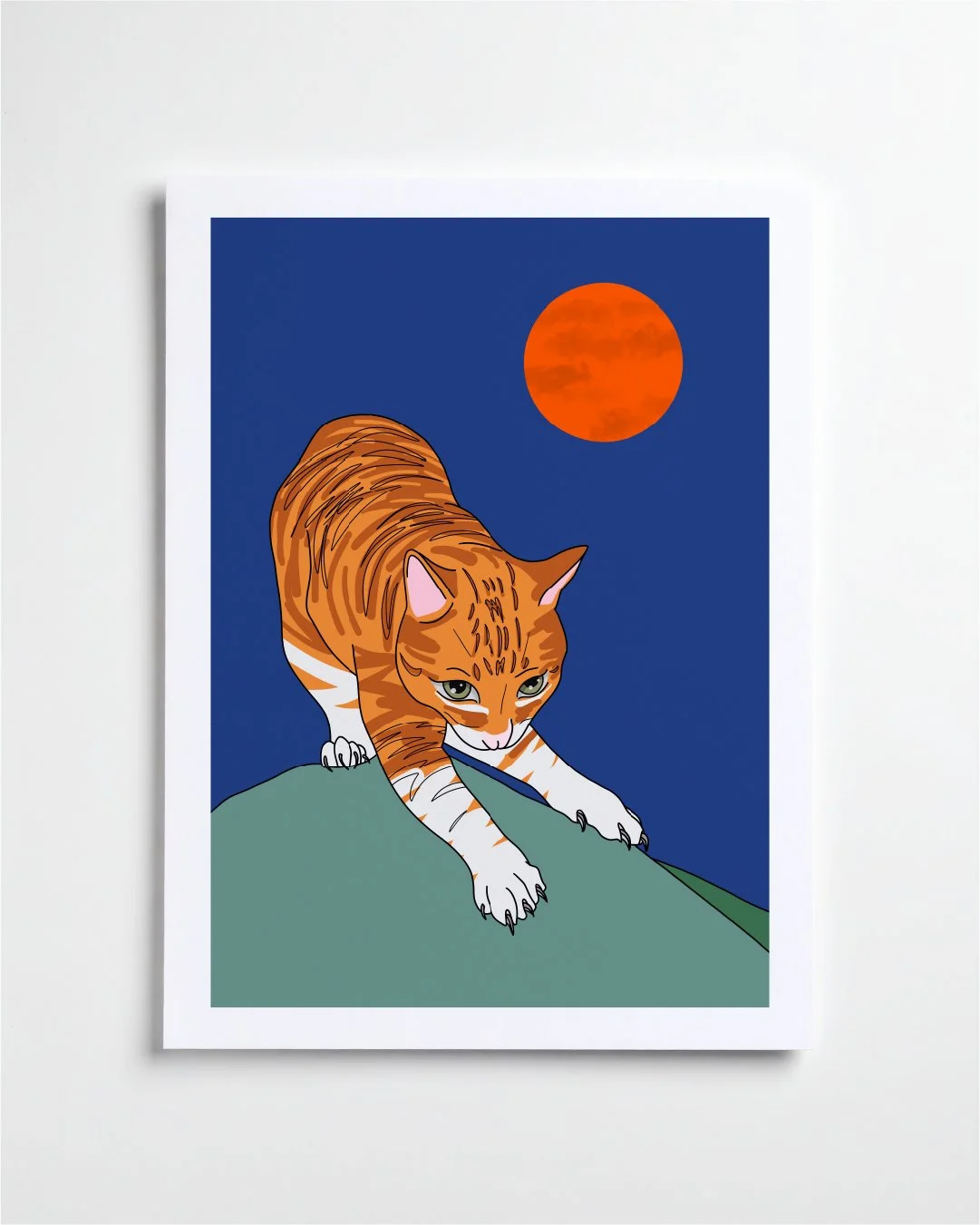
Only after reading the diary would I begin drawing.
I wasn’t illustrating the photograph.
I was illustrating the story that had emerged between my memory and AI’s imagination.
Every illustration became another interpretation of the same moment.
Looking back, I realise the project was never really about AI.
AI simply made visible something that already happens whenever we remember.
No memory is completely accurate.
We notice some things.
We forget others.
We invent connections without realising it.
The moment changes every time we revisit it.
Virtual Diary allowed me to work inside that space.
Not between reality and fiction, but between observation and memory.
Perhaps that’s why the project still feels unfinished.
Not because there are more diary entries to make, but because the question behind it has never really gone away.
How do we hold on to an ordinary moment?
How does it change each time we remember it?
And when does memory quietly become imagination?
Looking back, those questions remain unanswered. Perhaps they never will be. They simply became the beginning of the work that followed.
Virtual Diary has ended.
But the habit behind it never did.
Today, it continues as The Diary.